Oven-Braised Beef Brisket
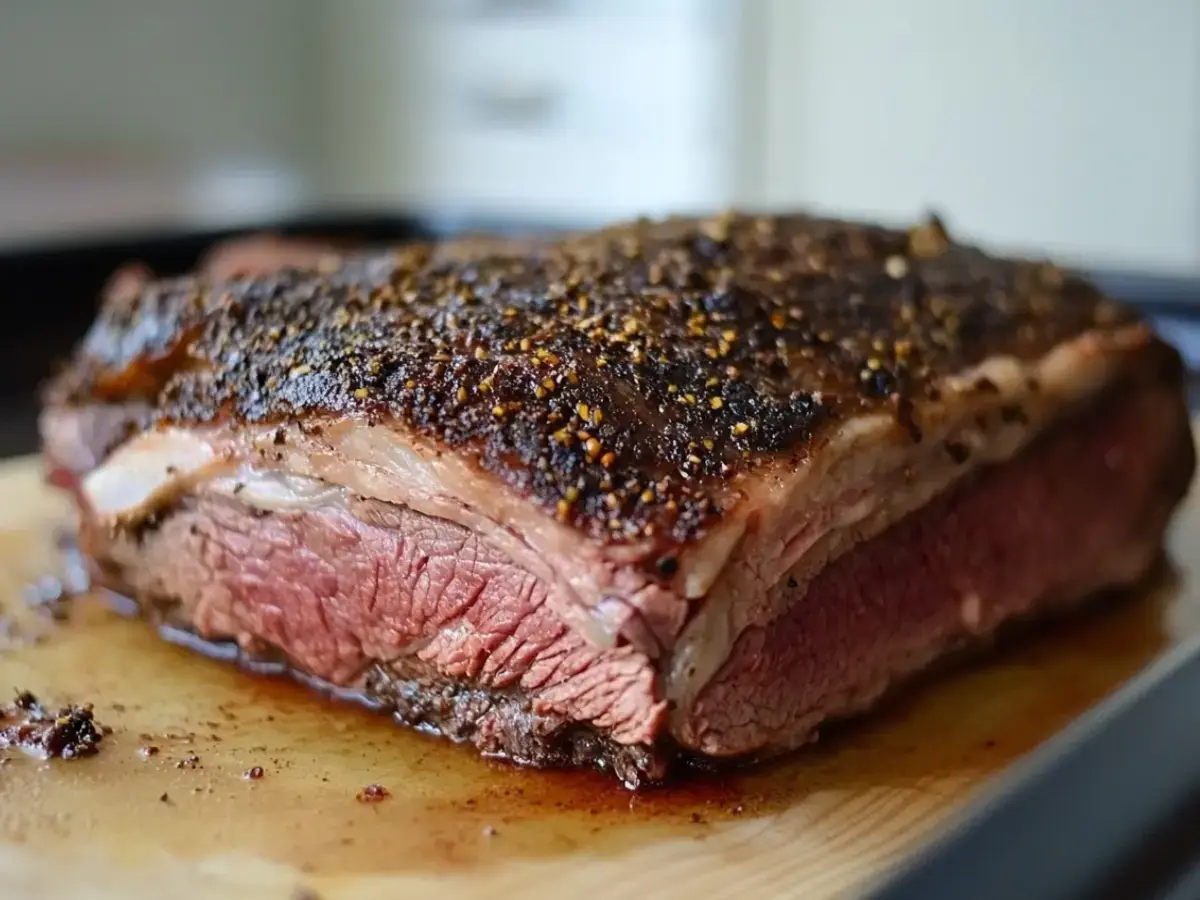
Hot and uncovered to build a crust, then low and covered for four hours — and 203°F matters more than any clock.
Total: 5 hr 45 minYield: 8 servingsMethod: Roasting
In this recipe
The two-temperature method
Quantities are in the recipe card. This is the shape of a five-hour cook.
- Rub and restSalt-forward rub over the whole cut. Uncovered in the fridge if there is time — a dry surface browns far better.
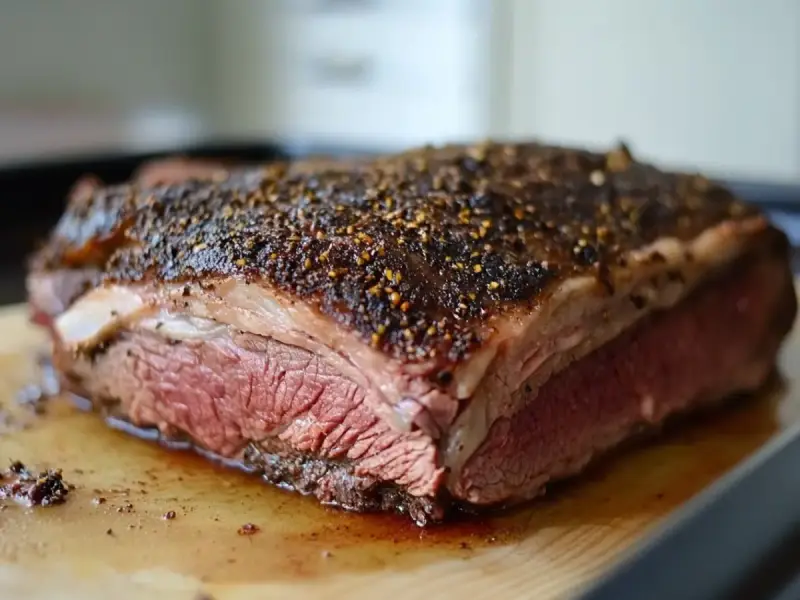
- 425°F, uncoveredAbout 75 minutes. This is the only stage that builds crust, and it cannot be recovered later.
- Drop to 300°FLiquid goes in around the meat, never over it. The crust stays above the braise.
- Covered, 3.5 to 4 hoursTight foil. The collagen breaks down slowly and this is where tenderness comes from.
- 203°F and a fork testFeel, not time. A fork should twist with no resistance.
- Rest 30 minutesThen slice against the grain.
Why 203°F and not 145°F
USDA guidance puts the safe minimum for whole cuts of beef at 145°F with a three-minute rest, and a brisket passes that hours before it is ready to eat. Safety and tenderness are separate questions here, and brisket is the clearest example of the difference.
What takes the extra hours is collagen. Brisket is a hard-working muscle full of connective tissue that stays tough until it breaks down into gelatin, and that process needs sustained heat well above the safe minimum. Around 203°F is where most briskets arrive, but it is a guide rather than a rule — the fork test is more reliable than the number.
Troubleshooting
| Problem | Cause | Fix |
|---|---|---|
| It is tough and dry | It came out too early, in the range where it is safe but not tender. | Put it back covered. Brisket often stalls for an hour and then softens quickly. |
| There is no crust | The high-heat stage was skipped or shortened. | The uncovered 425°F hour is the only chance to build one. |
| The slices fall apart untidily | It was sliced too soon, or with the grain. | Rest 30 minutes and check the grain direction before cooking. |
| The crust went soggy | The braising liquid covered the meat. | Pour it around the brisket, not over it, and keep the level below the top of the cut. |
Storage and reheating
Brisket reheats better than most roasts because it sits in its own juices. Refrigerate up to 4 days, ideally in slices under some of the skimmed liquid, and reheat to 165°F (74°C), the USDA safe temperature for leftovers.
Reheat covered at 325°F rather than in a microwave, which dries the edges. It freezes well for up to 3 months, again with liquid.
Oven-Braised Beef Brisket
Brisket roasted uncovered at high heat to build a crust, then braised low and covered until it pulls apart. Two temperatures, in that order, doing two different jobs.
- Beef
- Main Dish
- Roasting
Scaling disabled. Brisket cooking time depends on the thickness and weight of the specific cut, not on a multiplier, and doubling the rub on a larger brisket does not double the cook time.
Cook’s checkpoint
- Frying oil
- 350°F / 175°C
- Chicken, thickest part
- 165°F / 74°C
Use a food thermometer. Color and time alone don’t confirm poultry is done.
Ingredients
For the brisket
For the braise
Instructions
Notes
- The grain direction changes between the flat and the point of a brisket. Slice each part accordingly.
- The 30-minute rest is not optional; it is the difference between moist slices and a dry board.
Cooking Mode
Questions
- Why is scaling turned off for this recipe?
- Because brisket timing follows the thickness and weight of your particular cut rather than a multiplier. A larger brisket needs more rub but not proportionally more time, and multiplying the numbers would give a misleading answer.
- Flat or point cut?
- The flat is leaner and slices neatly; the point has more fat and shreds well. Either works with this method — the point is more forgiving if you overshoot.
- Can I do this in a slow cooker?
- You can braise it, but you cannot build the crust, so sear it hard in a pan or under a broiler first. Then 8 hours on low, checking for the same fork tenderness.