Beef Ramen Noodles
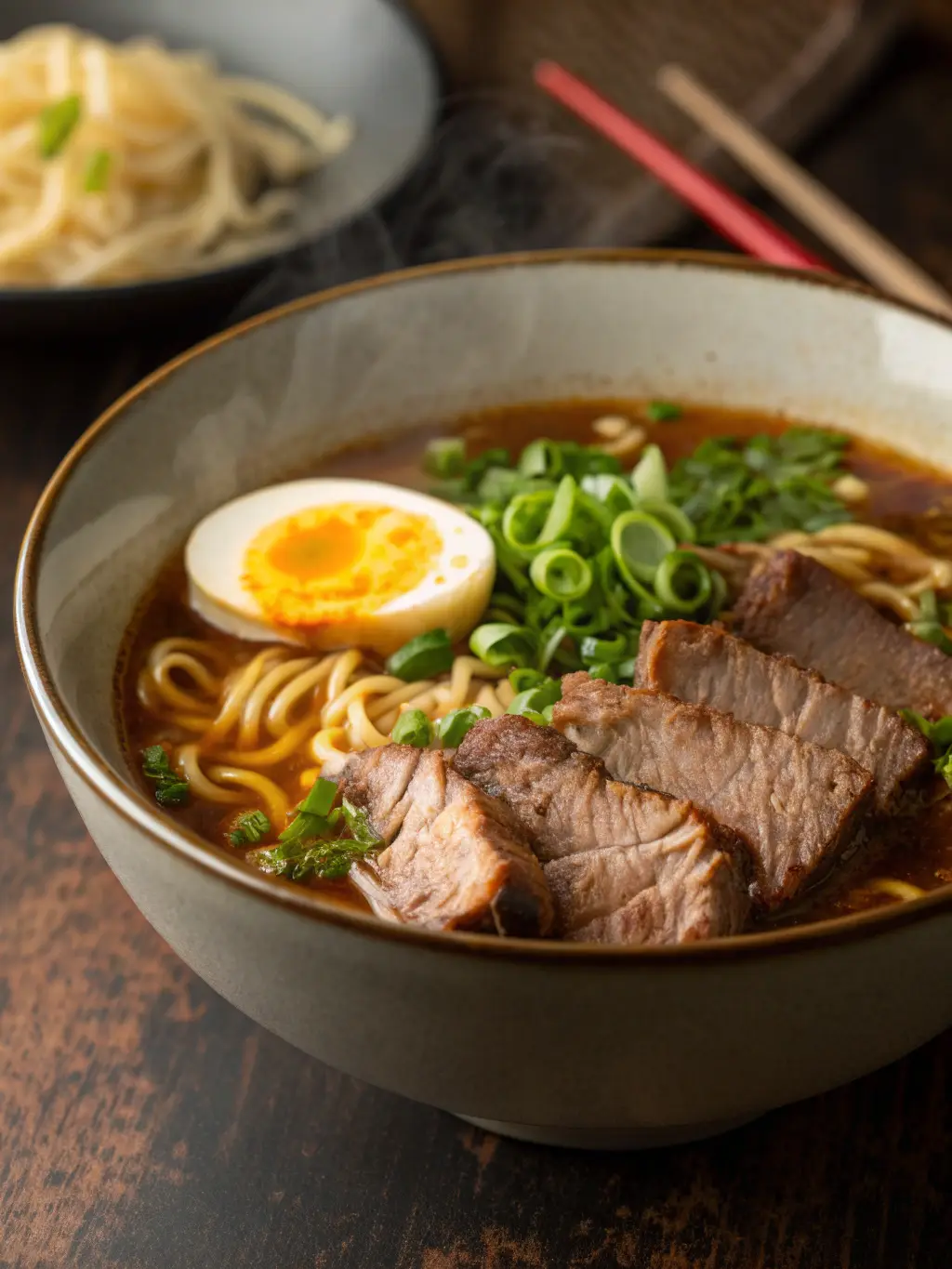
A weeknight ramen that keeps the broth clear and the noodles firm by never cooking them together.
Total: 45 minYield: 4 bowlsMethod: Stovetop
In this recipe
What makes this work
Most home ramen fails in the bowl rather than the pot: the noodles go in early, keep absorbing, and by the time it reaches the table they are soft and the broth has gone cloudy and starchy. This recipe treats the broth, the beef and the noodles as three separate jobs that only meet at the end.
The broth is a shortcut build rather than a long bone stock. Beef stock carries the body; garlic, ginger, soy and mirin go in early; miso goes in last, off the boil, because boiling miso flattens it and leaves a grainy texture.
Ingredient notes
Three items decide how this turns out.
- The beef
- Sirloin or flank, sliced thin against the grain. Against the grain matters more than the cut — flank sliced with the grain is chewy no matter how briefly you cook it.
- Miso paste
- Red or mixed gives enough backbone to stand against beef stock. White miso is mild enough to disappear here.
- Ramen noodles
- The instant blocks are the right texture for this. Throw the seasoning packets away — they will make the finished broth far too salty.
Cues to watch
- The aromaticsGarlic and ginger need 30 to 45 seconds, no more. If they color past pale gold the broth picks up a bitter edge you cannot remove later.
- The searThe pan must shimmer before the beef goes in, and the beef must go in two batches. Crowding drops the temperature and the meat releases liquid and steams gray instead of browning.
- The misoLoosen it in a cup of hot broth first. Dropped straight into the pot it clumps, and stirring hard enough to break the clumps is usually enough to boil off what makes it taste good.
Troubleshooting
| Problem | Cause | Fix |
|---|---|---|
| The broth is cloudy | The noodles were cooked in it and released their starch. | Boil the noodles separately and drain them before they go in the bowl. |
| The noodles are soft by the time you eat | They finished cooking in hot broth. | Pull them at 2 to 3 minutes, while still firm. They keep softening in the bowl. |
| The beef is gray and tough | The pan was not hot enough, or it was overcrowded. | Get the oil shimmering and sear in two batches. |
| The broth tastes flat | The miso was boiled after it went in. | Add miso off the boil and keep the pot below a simmer from then on. |
Storage
Store the broth, beef and noodles in separate containers, refrigerated up to 3 days. Assembled leftover ramen does not survive — the noodles turn to paste.
Reheat the broth to 165°F (74°C), which is the USDA's safe temperature for leftovers, then pour it over noodles you have just refreshed in hot water for 30 seconds.
Beef Ramen Noodles
Sirloin marinated in soy and cornstarch, seared hard, and served over ramen in a miso-and-ginger beef broth. The broth is built separately from the noodles so nothing turns soft.
- Beef
- Main Dish
- Stovetop
Cook’s checkpoint
- Frying oil
- 350°F / 175°C
- Chicken, thickest part
- 165°F / 74°C
Use a food thermometer. Color and time alone don’t confirm poultry is done.
Ingredients
For the broth
For the beef
To finish
Instructions
Notes
- Slicing the beef is easier if it sits in the freezer for 15 minutes first.
- Discard the ramen seasoning packets — the broth is already seasoned.
Cooking Mode
Questions
- Can I use a different cut of beef?
- Yes. Anything you can slice thin against the grain works — sirloin, flank and skirt all behave the same way here. Avoid stewing cuts; they need hours, not 90 seconds.
- Do I have to use miso?
- Without it the broth is thinner and saltier in character. If you skip it, hold back some of the soy sauce, taste, and adjust at the end.
- Can I make the broth ahead?
- Yes, and it is the best part to make ahead. Build it through the miso step, cool it, and refrigerate up to 3 days. Sear the beef and cook the noodles fresh.