Chickpea Curry with Rice
Sixty seconds of spices in hot oil is the step that separates a real curry from a bowl of tomato and chickpeas.
Total: 45 minYield: 4 servingsMethod: Stovetop
In this recipe
Blooming, and why it is not optional
Most of the flavor compounds in ground spices are fat-soluble, not water-soluble. Dropped into a simmering tomato base they never fully release, which is why a curry made that way tastes thin and slightly powdery no matter how long it cooks.
Heated in oil for under a minute, the same spices behave completely differently. The fat dissolves the aromatic compounds and carries them through the whole dish, and the heat drives off the raw dusty note that ground spices carry out of the jar.
The window is narrow: about forty-five to sixty seconds, stirred constantly. Under that and nothing much has happened. Over it — especially with turmeric, which is delicate — the spices scorch and turn bitter, and a bitter spice base cannot be corrected later.
The tomato paste that follows works the same way, which is why it gets its own two minutes before any liquid arrives. Both steps are short, both are easy to skip, and skipping either is usually why a homemade curry tastes flatter than it should.
How the pot builds
Six stages, each one short, and the order is not interchangeable.
- Onion, 6-8 minutesSoft and just coloring. This is the sweet base everything else sits on and it cannot be rushed to two minutes.
- Garlic and ginger, 1 minuteBoth burn quickly, which is why they come after the onion rather than with it.
- Dry spices, 45-60 secondsConstant stirring, in the oil. The single most important minute in the recipe.
- Tomato paste, 2 minutesCooked to brick red. Raw paste leaves a metallic edge that persists through everything.
- Tomatoes and coconut milk, 15 minutesUncovered, so it reduces. This is where the sauce goes from liquid to something that clings to the chickpeas.
- Spinach and lime, off the heatThe spinach wilts in residual heat; the lime stays bright because it never simmers.
Troubleshooting
| Problem | Cause | Fix |
|---|---|---|
| The curry tastes flat and powdery | The spices went into liquid rather than hot oil. | Bloom them for a full minute in the fat before anything wet arrives. |
| It tastes bitter | The spices scorched. | Sixty seconds at medium heat, stirring the whole time. Turmeric in particular burns fast. |
| The sauce is watery | Light coconut milk, or the pot was covered. | Full-fat coconut milk and an uncovered simmer for the full 15 minutes. |
| The rice is sticky | It was not rinsed, or the lid came off during the rest. | Rinse until the water runs clear, and leave the lid alone for the full 10 minutes off the heat. |
| It tastes rich but dull | The lime was added during the simmer or left out. | Off the heat, at the end. Acid added to a hot pot loses most of its brightness. |
Storage and reheating
Refrigerate the curry and rice separately, up to 4 days. This is one dish that genuinely improves overnight — the spices settle into the coconut milk and the whole thing tastes more integrated on the second day.
Reheat to 165°F (74°C), the USDA safe temperature for leftovers. The curry reheats well in a pan over medium-low with a splash of water; rice does best with a spoonful of water and a lid, which steams it back to separate grains.
The curry freezes for 3 months and holds up unusually well, since coconut milk is more stable than dairy cream. Freeze it without the spinach and stir fresh greens in when reheating. Cooked rice freezes acceptably but is better made fresh.
Chickpea Curry with Rice
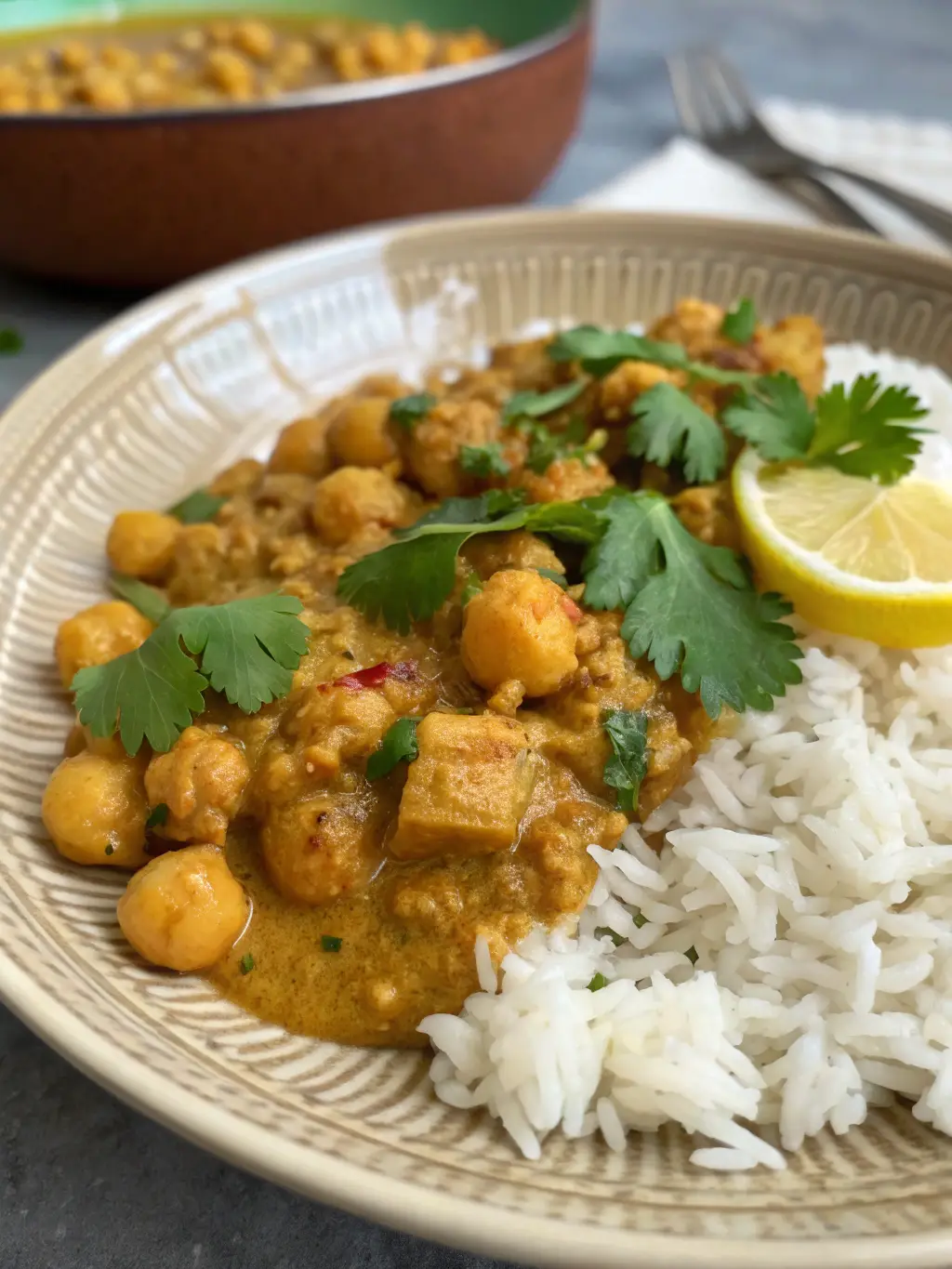
Chickpeas simmered in a coconut and tomato curry over basmati rice, built on spices bloomed in oil rather than stirred into liquid. No meat, and nothing pretending to be meat.
- Vegetarian
- Main Dish
- Stovetop
Cook’s checkpoint
- Frying oil
- 350°F / 175°C
- Chicken, thickest part
- 165°F / 74°C
Use a food thermometer. Color and time alone don’t confirm poultry is done.
Ingredients
For the rice
For the curry base
For the curry
To serve
Instructions
Notes
- Full-fat coconut milk is what makes this a curry rather than a thin stew. Light coconut milk will not thicken in fifteen minutes and produces a watery sauce.
- Rinsing basmati until the water runs clear removes surface starch and is the difference between separate grains and a sticky mass.
Cooking Mode
Questions
- Can dried chickpeas be used?
- Yes — soak overnight and simmer until tender before they go in at step 7. They hold their shape better than canned and are worth the planning, but they must be fully cooked first; they will not soften in an acidic tomato and coconut base.
- How spicy is this?
- Mild to moderate. Half a teaspoon of cayenne across four servings gives warmth rather than heat. The other spices are aromatic rather than hot, so adjust the cayenne alone.
- Can the coconut milk be replaced?
- Heavy cream works and gives a richer, less fragrant result. Cashew cream is the closest non-dairy substitute. Light coconut milk is the one to avoid — it will not thicken.
- What else can go in?
- Cubed sweet potato added with the tomatoes, or cauliflower florets in the last ten minutes, both work well. Add them at a point that matches how long they need rather than all at the end.