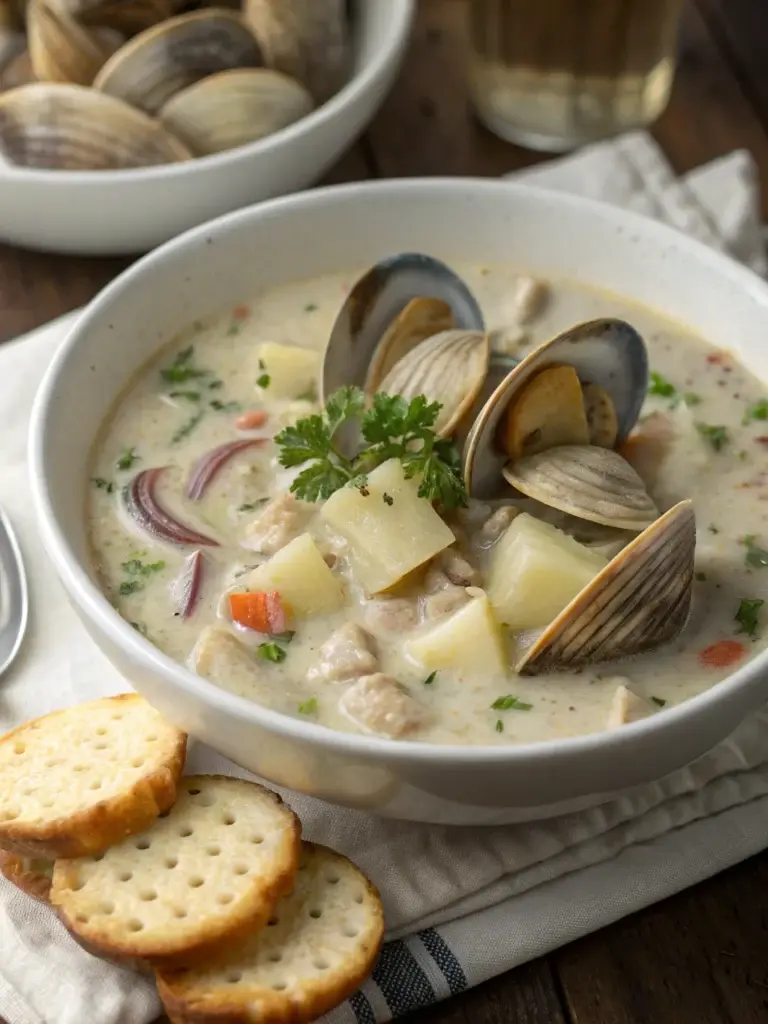
New England Clam Chowder
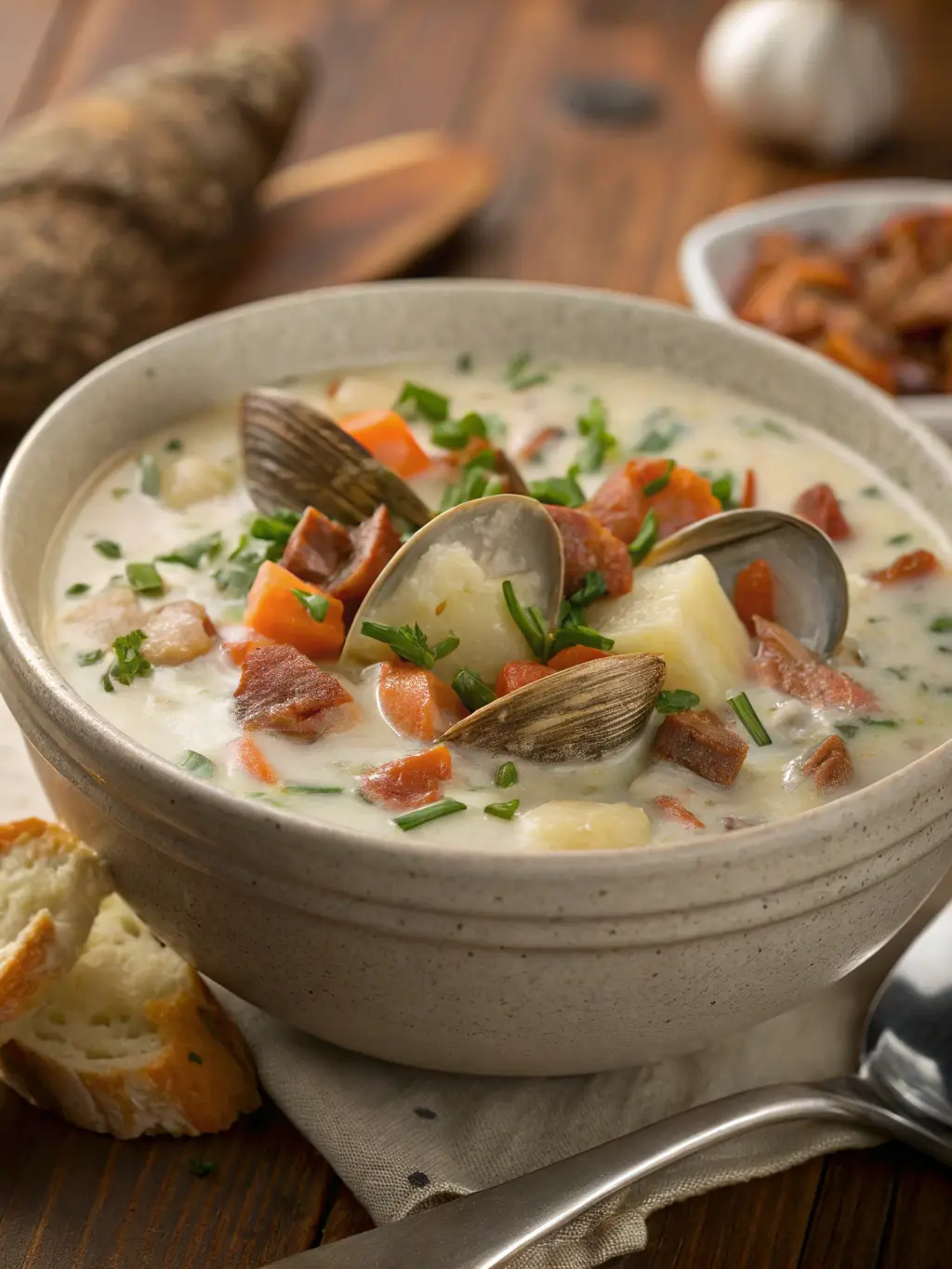
Clam juice rather than stock, a flour roux for body, and dairy that goes in last and never boils.
Total: 45 minYield: 4 servingsMethod: Stovetop
Clam juice is the point
Two cups of bottled clam juice plus the liquid drained from the cans is the entire liquid base before the dairy. There is no chicken stock and no water, and that is deliberate: chowder built on stock tastes like potato soup with clams added, while chowder built on clam juice tastes of the sea the whole way through.
It also means the seasoning cannot be fixed in advance. Clam juice varies considerably in salt between brands, which is why step 9 is a genuine instruction rather than a closing courtesy.
The order matters
Four stages, each of which fails in a specific way if rushed.
- Render the baconSlowly, until crisp. The fat left behind is the cooking medium for the vegetables and carries flavor into everything after it. The bacon itself comes out and waits.
- Cook the rouxA full minute of constant stirring once the flour goes in. Skip it and a raw flour taste survives the entire simmer.
- Simmer the potatoes15 to 20 minutes in the clam-juice base, before any dairy. Potatoes cooked in cream take longer and can curdle it.
- Finish off the boilCream, milk, then clams and bacon, all over low heat. The surface should barely move.
Cues to watch
- Potato donenessA cube should crush against the pot side under light pressure. Undercooked potato will not soften later, once the dairy is in and the heat is down.
- The dairy stageBarely a shiver on the surface. A rolling boil splits it, and a split chowder cannot be brought back.
- The clams are already cookedFive minutes of gentle heat is warming, not cooking. Longer makes them rubbery.
New England Clam Chowder
Bacon fat and a flour roux carry the body; clam juice rather than stock carries the flavor. The cream goes in at the end and the pot never boils again after it does.
- Soup
- Soup
- Stovetop
Cook’s checkpoint
- Frying oil
- 350°F / 175°C
- Chicken, thickest part
- 165°F / 74°C
Use a food thermometer. Color and time alone don’t confirm poultry is done.
Ingredients
Instructions
Notes
- Reserve the juice from the cans. It goes in with the bottled clam juice at step 5 and is free flavor.
- For a thicker chowder, crush a few cooked potato cubes against the side of the pot before the clams go in.
- A splash of white wine after the vegetables soften is a common addition and deglazes the pot.
- The bacon returns at the end rather than staying in; stirred in early it goes soft.
Cooking Mode
Questions
- Can I use fresh clams?
- This recipe is written around two cans of chopped clams and their reserved juice, which is also part of the liquid base. Fresh clams would change both the timing and the amount of liquid, so it is not a direct swap.
- Why did my chowder curdle?
- It boiled after the cream went in. Once dairy splits there is no reliable rescue, so prevention is the whole game — keep it below a simmer from step 7 onward.
- How do I thicken it without more flour?
- Crush a few of the cooked potato cubes against the side of the pot. The released starch thickens the broth without dulling the flavor.