Tuscan Chicken Pasta
A cream sauce with three sources of salt already in it — and a cup and a half of pasta water that fixes almost everything else.
Total: 40 minYield: 4 servingsMethod: Stovetop
In this recipe
Three salty things and one cream
Parmesan, sun-dried tomatoes and salted pasta water are all significant sources of salt, and they all end up in the same skillet. This is why the sauce carries only half a teaspoon of added salt and why tasting before adding more matters here more than in most recipes.
The cream is doing the opposite job — softening and carrying. A cup and a quarter against twelve ounces of pasta is enough to coat without turning the dish into soup, provided it is reduced for a few minutes first rather than poured in and immediately tossed with the noodles.
The wine is the third element and the one people skip. Half a cup, reduced by half, adds the acidity that keeps a cream-and-cheese sauce from reading as flat and heavy by the third forkful. Without it the dish is noticeably duller, and no amount of red pepper flakes substitutes.
What the reserved water is for
- It is starch, not just waterWater that has boiled twelve ounces of pasta is full of released starch. That starch is an emulsifier — it binds fat and liquid so the sauce clings to the noodles instead of pooling at the bottom of the bowl.
- Reserve before draining, alwaysA cup and a half, taken with a mug before the colander. This is the single most-forgotten step in every skillet pasta recipe, and there is no way to recreate it afterwards.
- Add it in splashesA little at a time while tossing. The sauce goes from tight to glossy quite suddenly, and it is easy to overshoot into thin.
- Finish looser than looks rightPasta keeps absorbing after it leaves the heat. A sauce that looks perfect in the pan will be tight by the time it reaches the table.
- It also fixes a split sauceIf the cream has started to separate, a splash of starchy water and vigorous tossing off the heat will often bring it back together.
Troubleshooting
| Problem | Cause | Fix |
|---|---|---|
| The sauce is thin and pools in the bowl | Too much pasta water, or the cream was not reduced first. | Simmer the cream 3 to 4 minutes before the pasta joins it, and add water gradually. |
| The sauce is claggy and tight | It sat, or not enough pasta water went in. | Another splash of the reserved water off the heat, tossing continuously. |
| It split into oil and liquid | The cream boiled, or the parmesan went in over direct heat. | Gentle simmer only, and cheese off the burner. |
| It tastes salty | The parmesan, sun-dried tomatoes and pasta water stacked up. | Taste before adding the last half teaspoon of salt. This sauce usually does not need it. |
| The chicken is dry | It was cooked past 165°F or sliced immediately. | Pull it at temperature and let it rest while the sauce is built — that is exactly how long it needs. |
Storage and reheating
Refrigerate up to 3 days. Cream sauces on pasta always tighten overnight as the noodles keep absorbing; the dish will look considerably drier than it did.
Reheat to 165°F (74°C), the USDA safe temperature for leftovers, in a skillet over low heat with a splash of milk or water. Stir gently rather than vigorously — the sauce is more fragile the second time.
It does not freeze. Cream sauce separates on thawing and cooked fettuccine turns soft, and neither problem is recoverable.
Tuscan Chicken Pasta
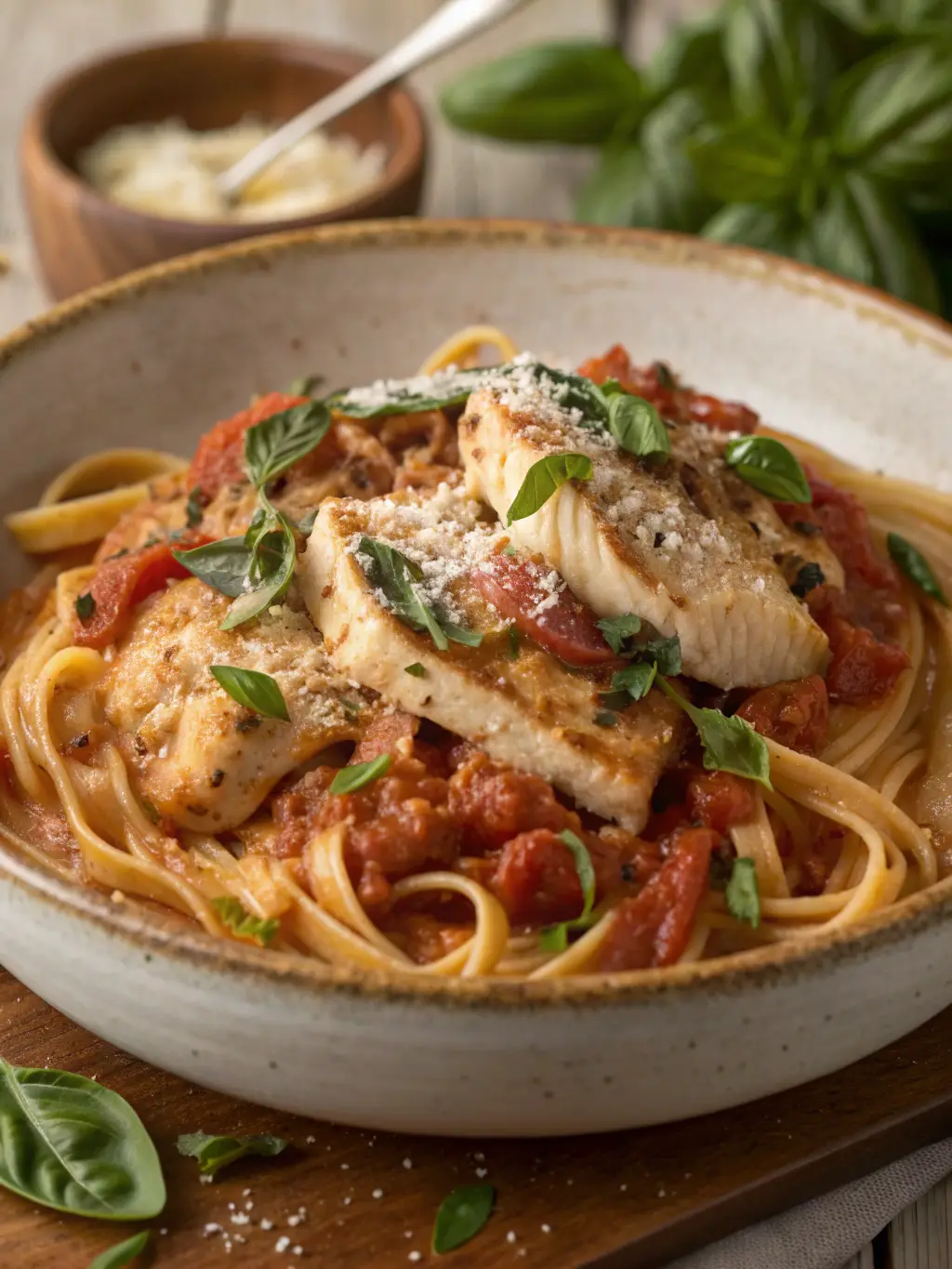
Seared chicken sliced over fettuccine in a cream sauce built on sun-dried tomatoes, garlic and spinach, loosened with pasta water. Thirty minutes, one skillet after the pasta pot.
- Chicken
- Main Dish
- Stovetop
Cook’s checkpoint
- Frying oil
- 350°F / 175°C
- Chicken, thickest part
- 165°F / 74°C
Use a food thermometer. Color and time alone don’t confirm poultry is done.
Ingredients
For the chicken
For the sauce
For the pasta
Instructions
Notes
- Oil-packed sun-dried tomatoes are softer and more intense than dry-packed. If you only have dry-packed, soak them in hot water for 10 minutes and add a tablespoon of olive oil to the pan.
- The chicken rests while the sauce is built, which is the whole reason it stays juicy. Slicing it straight out of the pan loses the juice onto the board instead of into the pasta.
Cooking Mode
Questions
- Can this be made without wine?
- Yes. Use an equal amount of chicken broth plus a teaspoon of white wine vinegar and reduce it the same way — the acidity is what the wine is really contributing.
- What pasta shape works besides fettuccine?
- Anything with surface for a cream sauce to cling to. Pappardelle and tagliatelle are natural swaps; penne and rigatoni work and trap sauce inside the tubes.
- Can chicken thighs be used?
- Yes, and they are harder to overcook. Boneless thighs need about 6 to 7 minutes a side and are done at the same 165°F.
- Is fresh spinach necessary, or will frozen do?
- Frozen works if it is thawed and squeezed genuinely dry first. Added wet it releases water into the sauce and thins it — the opposite of what the reserved pasta water is being used to control.