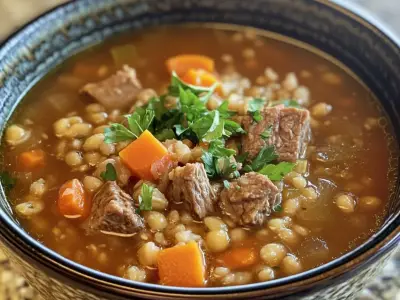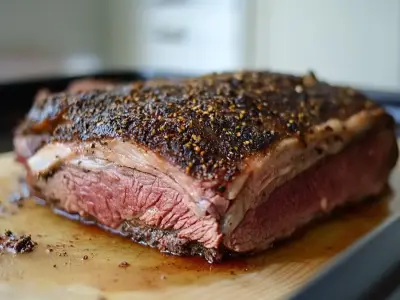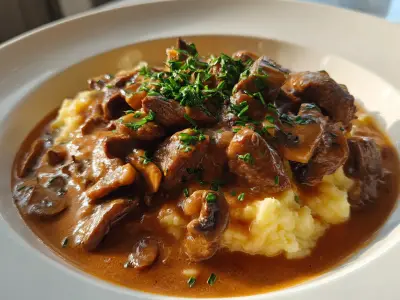
Classic Slow Cooker Beef Stew
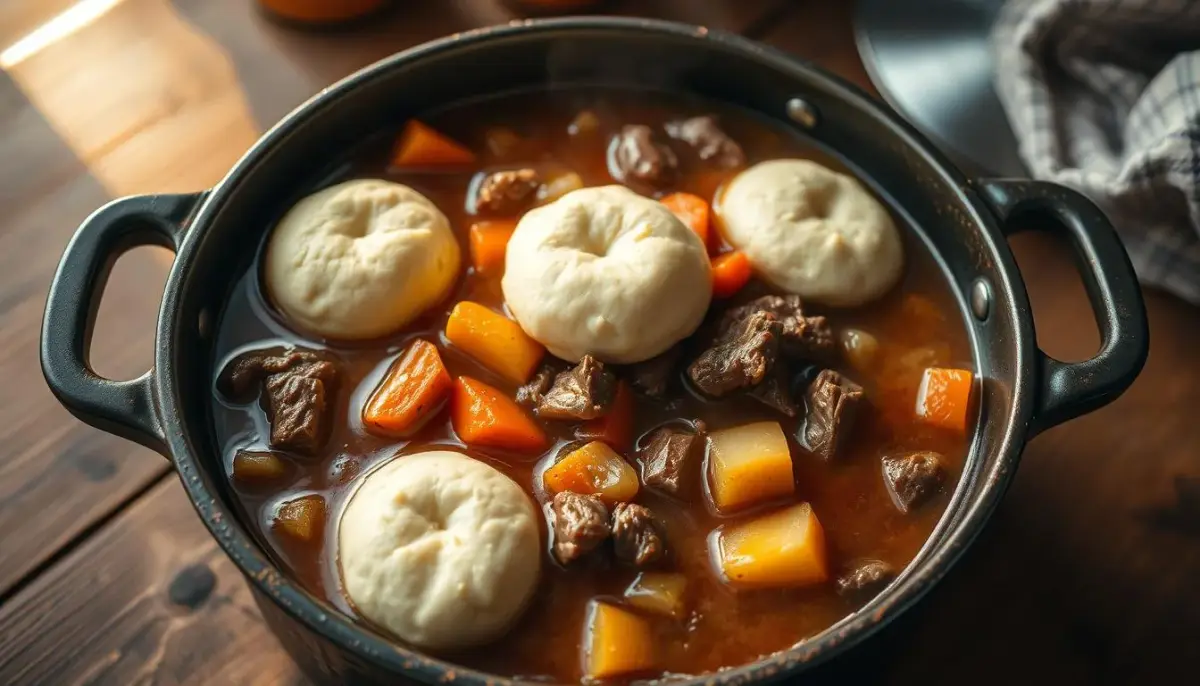
Chuck, red wine and a slurry added at the right moment — the three decisions that separate a stew with body from a pot of gray liquid.
Total: 8 hr 30 minYield: 8 servingsMethod: Slow Cooking
In this recipe
Choosing what goes in
Four of these choices decide the outcome before the cooker is switched on.
- Beef chuck
- Shoulder meat, heavily marbled and full of connective tissue. That tissue is the reason it works: eight slow hours turn it to gelatin, which is what gives the broth its weight. A lean cut has nothing to convert and simply dries out.
- Baby Yukon Gold potatoes
- Lower starch than a russet, so they hold their shape across a long cook instead of dissolving into the liquid and clouding it.
- Dry red wine
- Cabernet sauvignon or merlot. Its acidity cuts the richness of the beef fat, and it deglazes the searing pan better than broth does. See the FAQ for the alcohol-free approach.
- Carrots in 1-inch chunks
- Cut smaller than this they disappear. The chunks are large on purpose so there is still something to bite into after eight hours.
Why the skillet comes out first
A slow cooker holds a gentle, wet heat. That is exactly what breaks down chuck, and exactly what cannot brown anything. Meat added raw produces a stew that tastes thin no matter how long it runs.
Forty-five seconds a side in a hot skillet is enough. The aim is color on the surface, not cooking, and crowding the pan defeats it — beef packed in tight releases moisture and steams gray. Two or three batches is normal for two and a half pounds.
The pan that seared the beef then carries the onions, garlic, tomato paste and wine, so every browned particle ends up in the cooker rather than in the sink.
What happens over eight hours
The clock matters less than knowing what stage the meat is in.
- First hourEverything comes up to temperature. The beef is already safe well before the hour is out, and it is also tough — this is the point at which an impatient cook decides the recipe has failed.
- Hours two to fourThe muscle fibres contract and squeeze out moisture. The meat is at its driest here. Nothing is wrong; this stage is unavoidable.
- Hours five to sevenCollagen begins converting to gelatin. The cubes soften noticeably and the broth starts to feel silkier on the spoon rather than watery.
- Hour eightA fork twists in a cube without resistance. Past this point the beef starts to shred rather than hold, which is fine for a stew but is the outer limit.
Getting the broth right
The flour on the beef does part of the work, but a slow cooker with the lid on loses almost no liquid, so a stew that has run all day is usually still looser than expected.
The correction is a cornstarch slurry stirred in at the end with the lid off. Two tablespoons of cornstarch whisked into two tablespoons of cold water, then stirred through and given fifteen minutes on high, thickens without the raw taste that stirring dry cornstarch straight into the pot produces.
If it is still thin, repeat with another tablespoon rather than cooking it longer. Extra time at this stage overcooks the potatoes and does very little to the liquid.
Troubleshooting
| Problem | Cause | Fix |
|---|---|---|
| The beef is tough after six hours | It has not finished converting collagen yet. | Give it longer rather than turning the heat up. Undercooked chuck is a time problem, not a temperature one. |
| The potatoes have fallen apart | A high-starch potato was used, or the cooker ran on high all day. | Use waxy baby Yukon Golds and prefer the low setting. |
| The broth is watery | Nothing evaporates under a slow cooker lid. | Finish with the cornstarch slurry, uncovered, on high for 15 to 20 minutes. |
| It tastes flat | The beef went in without searing, or the wine step was skipped. | Both stages build flavor that cannot be added later. Salt at the end will not replace them. |
| The peas are gray | They were added at the start. | Frozen peas need only the last 15 minutes. |
Storage and reheating
Cool within two hours and refrigerate up to 4 days. Stew is one of the few dishes that genuinely improves on the second day, once the gelatin has set and the flavors have settled.
Reheat to 165°F (74°C) throughout, the USDA safe temperature for leftovers. A pot over medium-low heat with a splash of broth gives a more even result than a microwave, which tends to overheat the liquid while the center of a potato stays cold.
It freezes for up to 3 months, though the potatoes turn slightly grainy. Leaving them out and adding freshly cooked ones when reheating avoids that entirely.
Classic Slow Cooker Beef Stew
Floured chuck seared hard, then braised low with red wine, beef broth and root vegetables until the collagen gives way. The peas and the cornstarch go in at the end, not the beginning.
- Soup
- Main Dish
- Slow Cooking
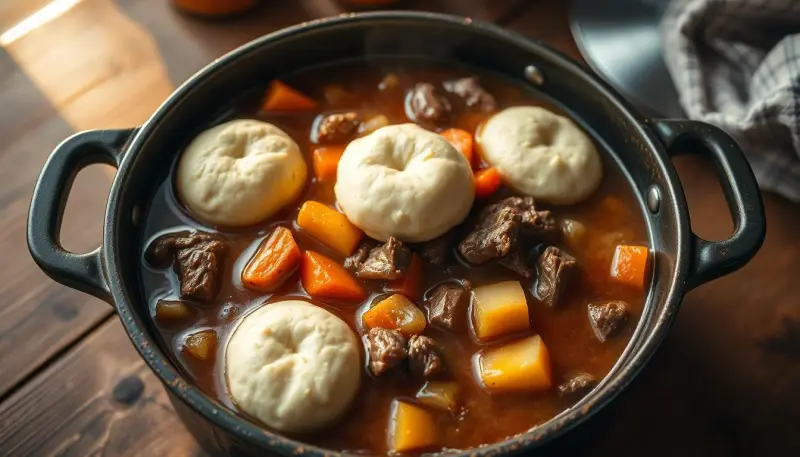
A slow cooker insert has a fixed capacity. Doubling this fills a standard 6-quart cooker past the safe two-thirds line, which changes how the food heats and lengthens the cook time unpredictably. Cook two batches rather than scaling the numbers.
Cook’s checkpoint
- Frying oil
- 350°F / 175°C
- Chicken, thickest part
- 165°F / 74°C
Use a food thermometer. Color and time alone don’t confirm poultry is done.
Ingredients
For the beef
For the pot
To finish
Instructions
Notes
- Chuck is the cut this recipe is built on. Rump and bottom round also work; lean cuts such as sirloin go dry and stringy over eight hours rather than tender.
- The peas are added at the end deliberately. Cooked from the start they lose their color completely and collapse.
Cooking Mode
Questions
- What can replace the red wine?
- An extra cup of beef broth with a tablespoon of balsamic vinegar covers both the liquid and the acidity. Deglaze the searing pan with it exactly as you would with wine.
- Do the vegetables go in at the same time as the beef?
- Carrots and waxy potatoes do, and they survive the full cook. Peas and any delicate greens do not — they belong in the last fifteen minutes.
- Can the beef be seared the night before?
- Yes. Sear, deglaze, cool everything and refrigerate the beef and the pan liquid separately, then load the cooker in the morning. Do not leave seared meat sitting at room temperature.
- Can the slow cooker run on high instead?
- Four to five hours on high works, but low gives a better texture. The gentler heat lets the collagen convert before the muscle fibres tighten too far.