Garden Risotto
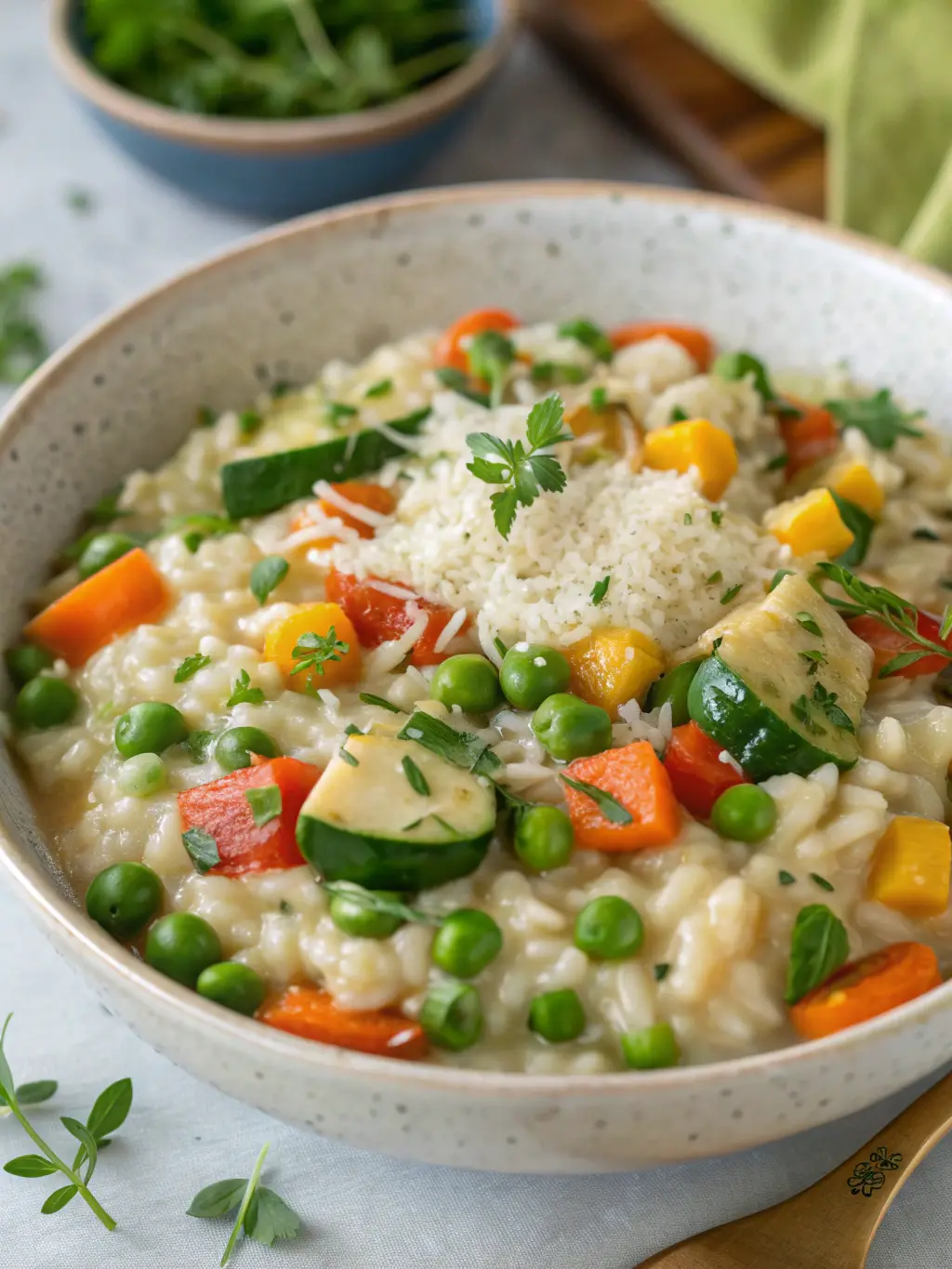
No cream, no blender, no shortcut — the texture comes from starch, agitation, and cold butter beaten in at the end.
Total: 50 minYield: 4 servingsMethod: Stovetop
In this recipe
Why the rice cannot be substituted
Risotto is a technique that only works on a specific kind of grain.
- Arborio
- Short, round, and coated in amylopectin — a soft starch that dissolves into the liquid as the grains rub together. That dissolved starch is the sauce. The most widely available option and the one this recipe assumes.
- Carnaroli
- Holds its shape slightly better and is more forgiving of a minute's inattention. Often called the chef's choice, and worth using if you find it.
- Long-grain rice
- Wrong starch, wrong shape. It will absorb the broth and cook, but nothing creamy will happen because there is no surface starch to release.
- Warm broth
- Not an ingredient so much as a condition. Cold liquid drops the pan temperature every time and interrupts the starch release the whole method depends on.
- Cold butter at the end
- Cold rather than melted, and off the heat. It emulsifies into the starchy liquid instead of separating out as oil.
The twenty minutes
Broth goes in gradually for a reason, and the vegetables enter on their own schedule.
- Toast the riceTranslucent edges, chalky centers. This firms the outside of each grain so it holds its shape through twenty minutes of stirring.
- Wine, almost fully evaporatedAcidity that cuts through the butter and parmesan later. Added at this stage it seasons the grain itself.
- Ladle, stir, waitEnough broth to just cover, absorbed almost completely, then repeat. The stirring is what rubs starch off the grains.
- Carrot and pepper inThe firmest vegetables, given the longest run.
- Zucchini and peas inBoth cook in minutes. Earlier and they disintegrate into the rice.
- Taste and stopTender with the faintest bite at the center. You may not need all six cups — the rice decides, not the recipe.
The final minute
The Italian name for the last step is mantecatura, and it is where risotto stops being rice in broth and becomes risotto. The pan comes off the heat, cold cubed butter and grated parmesan go in, and both are beaten in hard for about a minute.
What happens is an emulsion. The starch already suspended in the liquid holds the butter fat and the cheese together into something glossy and cohesive, which is why risotto is creamy without containing any cream. Doing it over heat breaks that emulsion — the butter separates and the parmesan goes stringy.
The consistency to aim for has a name too: all'onda, on the wave. Tilt the pan and the risotto should move slowly, settling flat rather than holding a shape. If it stands up in a mound it is too thick, and a final splash of hot broth will loosen it.
It then keeps thickening on the plate, which is why it is served the moment it is finished. Risotto held warm for ten minutes is a different and much stiffer dish.
Troubleshooting
| Problem | Cause | Fix |
|---|---|---|
| It is soupy | Too much broth at the end, or the last additions did not absorb. | Return it to low heat and stir until it thickens to the wave. Stop adding broth once the rice tastes right. |
| It is stiff and claggy | Overcooked, or it sat before serving. | Loosen with a splash of hot broth. Serve immediately — this is not a dish that holds. |
| The grains are hard in the middle | Cold broth, or the heat was too low. | Keep the broth at a bare simmer and the pan at a steady medium. Cold liquid stalls the whole process. |
| It is not creamy | Not enough stirring, or the butter was added over heat. | Stir regularly to release the starch, and beat the cold butter in off the burner. |
| The vegetables are mush | They all went in at the start. | Carrot and pepper at twelve minutes, zucchini and peas at sixteen. |
Storage and reheating
Risotto is genuinely a make-and-eat dish. Refrigerated up to 3 days it sets solid, and while it can be revived it will never regain the flow it had in the pan.
Reheat to 165°F (74°C), the USDA safe temperature for leftovers, in a pan over low heat with a good splash of hot broth, stirring until it loosens. Add a little fresh parmesan at the end to bring back some of the gloss.
The better use for leftovers is arancini: chill the risotto until firm, roll it into balls around a cube of mozzarella, coat in breadcrumbs and fry. Risotto does not freeze in any form worth eating.
Garden Risotto
Arborio toasted in butter, opened with wine, then brought up gradually with warm broth and finished with spring vegetables, parmesan and cold butter beaten in. No cream anywhere.
- Vegetarian
- Main Dish
- Stovetop
Risotto is finished by feel rather than by measurement — broth goes in until the rice is right, and how much that takes depends on pan width and how fast it evaporates. A larger batch in the same pan also changes the depth and therefore the stirring. Doubling the numbers would present a judgment call as arithmetic.
Cook’s checkpoint
- Frying oil
- 350°F / 175°C
- Chicken, thickest part
- 165°F / 74°C
Use a food thermometer. Color and time alone don’t confirm poultry is done.
Ingredients
For the base
For the vegetables
To finish
Instructions
Notes
- Arborio, carnaroli or vialone nano. All three are short-grain rices with the surface starch this method depends on; long-grain rice cannot make risotto no matter how it is treated.
- Risotto waits for nobody. It firms within a few minutes of leaving the pan, so everything else on the table should be ready before the butter goes in.
Cooking Mode
Questions
- Does risotto really need constant stirring?
- Regular, not constant. The stirring rubs starch off the grains, which is what creates the sauce, but a pan left alone for thirty seconds at a time comes to no harm. What matters is that it is never left long enough to catch.
- Can water replace the broth?
- It will cook the rice but the dish will taste thin, because the broth is the only savory liquid in a recipe with no meat. A good vegetable broth matters more here than in most recipes.
- Can this be made dairy-free?
- Olive oil can replace the butter and the finishing emulsion still works, though it is less glossy. The parmesan is harder to replace — it is contributing salt and savory depth as well as texture.
- Why is this a main course rather than a side?
- At a cup and a half of rice across four servings, with vegetables and cheese through it, it is a full plate. In Italy risotto is traditionally its own course rather than an accompaniment.