French Onion Pot Roast
Half an hour of onions is the price of admission. Everything else is a sear and eight unattended hours.
Total: 8 hr 40 minYield: 6 servingsMethod: Slow Cooking
In this recipe
What twenty-five minutes of onions buys
Four large onions look like far too much until they cook down. They lose roughly three-quarters of their volume, and what is left is not the same ingredient that went in — the harsh sulfur compounds have gone and the sugars have browned into something closer to jam than vegetable.
This is the difference between a pot roast with onions in it and a French onion pot roast. Ten minutes of softening gives you the first thing. The full half hour gives you the second, and no amount of broth, wine or cheese later will fake it.
Two practical points: the teaspoon of sugar is not for sweetness, it gives the browning something to start on. And the pan needs stirring every few minutes rather than constantly — the onions have to sit still long enough to catch, then be moved before they burn.
Before the cooker lid goes on
The active work happens in a skillet. Once it is loaded, the cooker is unattended for eight hours.
- Roast patted genuinely dry — paper towels, both sides, right before seasoning.
- Skillet hot enough that the oil shimmers before the meat touches it.
- All four sides and both ends seared, not just the two flat faces.
- Onions given the full 25 to 30 minutes, to deep amber rather than pale gold.
- Pan deglazed with the wine and scraped clean — everything stuck to that skillet belongs in the cooker.
- Thyme on the stem, not stripped; the stems come out at the end and take nothing with them.
The eight hours
Doneness here is a texture, not a temperature, and knowing that saves a lot of anxious lid-lifting.
- Safe, and inedibleThe roast is past the USDA safe minimum well inside the first hour and would be tough as rope. This is normal and is why a thermometer is the wrong tool for judging a braise.
- The tight phaseMuscle fibers contract and squeeze out moisture. A fork meets real resistance. Nothing has gone wrong.
- Collagen gives wayConnective tissue converts to gelatin and the roast loosens noticeably. The gravy thickens on its own as this happens.
- A fork, not a clockTwist a fork in the thickest part. No resistance means done. Resistance means more time — never more heat.
Troubleshooting
| Problem | Cause | Fix |
|---|---|---|
| The beef is tough at eight hours | A leaner cut was used, or the cooker runs cool. | Chuck is the cut for this. Give it another hour; a braise that needs longer is not a braise that has failed. |
| The gravy is thin | The flour step was skipped, or the lid trapped all the moisture. | Keep the two tablespoons of flour with the onions. To fix it at the end, simmer the strained liquid uncovered for 10 minutes. |
| It tastes flat | The onions were undercooked or the pan was not deglazed. | Both are flavor steps that cannot be replaced by seasoning later. |
| The meat is dry despite being tender | It was held on HIGH for a long stretch. | LOW is meaningfully better here. High heat drives moisture out faster than collagen converts. |
| The cheese went stringy | It was added while the pot was still at temperature. | Add it after the roast has rested and the pot has come off the heat. |
Storage and reheating
Refrigerate up to 4 days with the beef submerged in its gravy, which is what stops the surface drying out.
Reheat to 165°F (74°C), the USDA safe temperature for leftovers, covered at 325°F for about 25 minutes. A microwave heats the gravy long before the center of a piece of beef and leaves it unevenly hot.
This one genuinely freezes well, up to 3 months, because there is no dairy in the braise — the Gruyere goes on at serving. Freeze the beef in the gravy and add fresh cheese when you reheat it.
French Onion Pot Roast
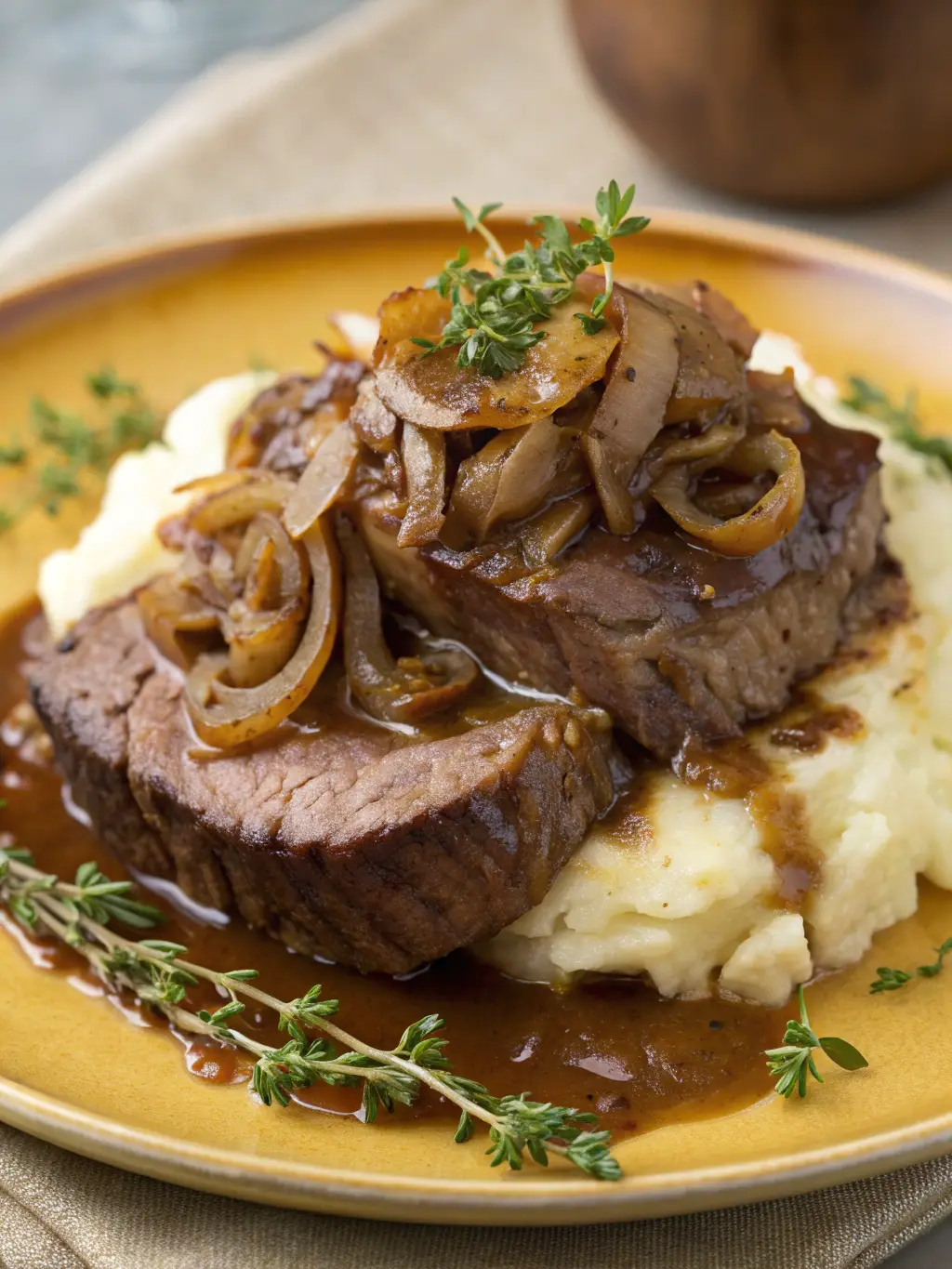
Chuck roast seared hard, then braised low over deeply caramelized onions with beef broth and thyme until it pulls apart. The onions are cooked down properly first, which is most of the work and all of the flavor.
- Beef
- Main Dish
- Slow Cooking
A slow-cooker insert has fixed capacity and a roast is a single piece of meat, not a multipliable quantity. Doubling this overfills a standard 6-quart cooker and changes the cook time in a way no multiplier predicts. Cook a larger single roast and extend the time by feel instead.
Cook’s checkpoint
- Frying oil
- 350°F / 175°C
- Chicken, thickest part
- 165°F / 74°C
Use a food thermometer. Color and time alone don’t confirm poultry is done.
Ingredients
For the roast
For the onions
For the braise
To finish
Instructions
Notes
- Gruyere is the nod to French onion soup and it melts without going stringy. Swiss works; mozzarella does not — it is too mild to register against three cups of braising liquid.
- The 25 to 30 minutes on the onions is the single biggest variable in this recipe. Onions given ten minutes are merely softened, and the finished dish tastes correspondingly thin.
Cooking Mode
Questions
- Can the onions be caramelized ahead?
- Yes, and it makes this a much easier weeknight proposition. They keep 5 days refrigerated. Sear the roast fresh on the day — a seared roast should not sit around.
- Is the wine necessary?
- No. Half a cup of extra beef broth with a teaspoon of white wine vinegar deglazes just as well and supplies the acidity, which is what the wine is really contributing.
- Can this be done in a Dutch oven instead?
- Yes — same steps, then 300°F in the oven with the lid on for about 3.5 hours. Check for fork-tenderness rather than going by the clock, and top up with broth if the level drops below halfway.
- What should it be served over?
- Anything that will take the onion gravy: mashed potato, egg noodles, polenta, or thick bread. This is a dish built around having something underneath it.